Soft Tissue Tumors - Mucinous Liposarcoma
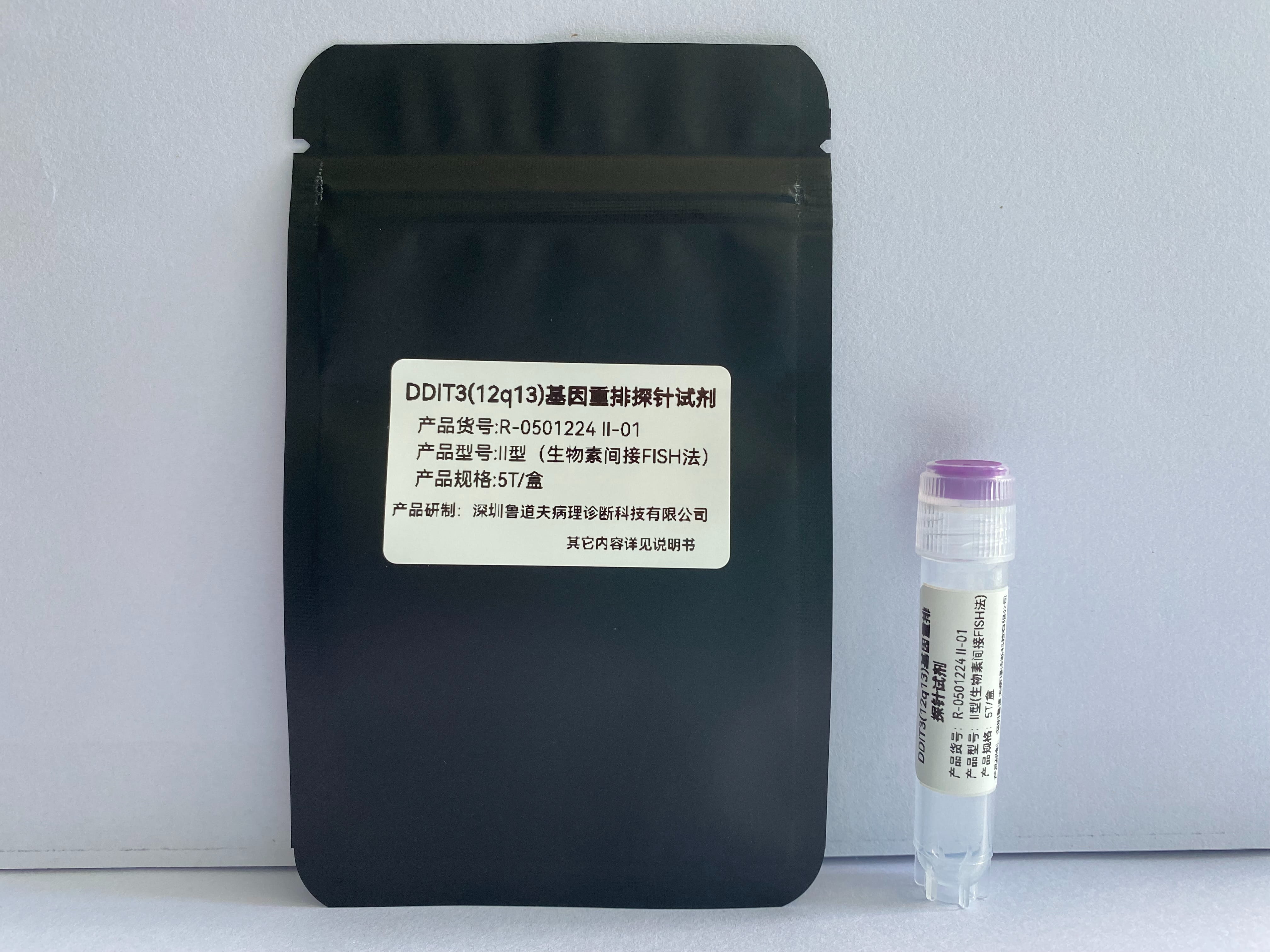
Applied to mucinous liposarcoma/round cell liposarcoma (myxoid liposarcoma/round cell liposarcoma). 55%-57% of cases show chromosomal abnormalities, mainly involving alterations such as 12q13-15, 6p21-23 and loss of some components in 13q. Mucinous liposarcoma/round cell liposarcoma accounts for 15%-20% of liposarcomas and the peak age of onset is 40-50 years. The age of onset is younger than for other types of liposarcoma. Although rare, it is the most common type of liposarcoma in children and adolescents. Greater than 95% of mucinous liposarcomas have a characteristic alteration t(12;16)(q13;p11) that results in the production of a DDIT3-FUS fusion gene.DDIT3 and MDM2 are in close proximity to each other in the genome, only 12 M apart, and MDM2 amplification should be suspected if the test for DDIT3 breaks is negative but shows a monochromatic/bicolor amplification, which needs to be confirmed with MDM2 probes. Mucinous liposarcoma needs to be differentiated from the following tumors with a mucinous morphology: high-grade mucinous fibrosarcoma, extraosseous mucinous chondrosarcoma, mucinous rhabdomyosarcoma, and chordoma.





 0752-2228195