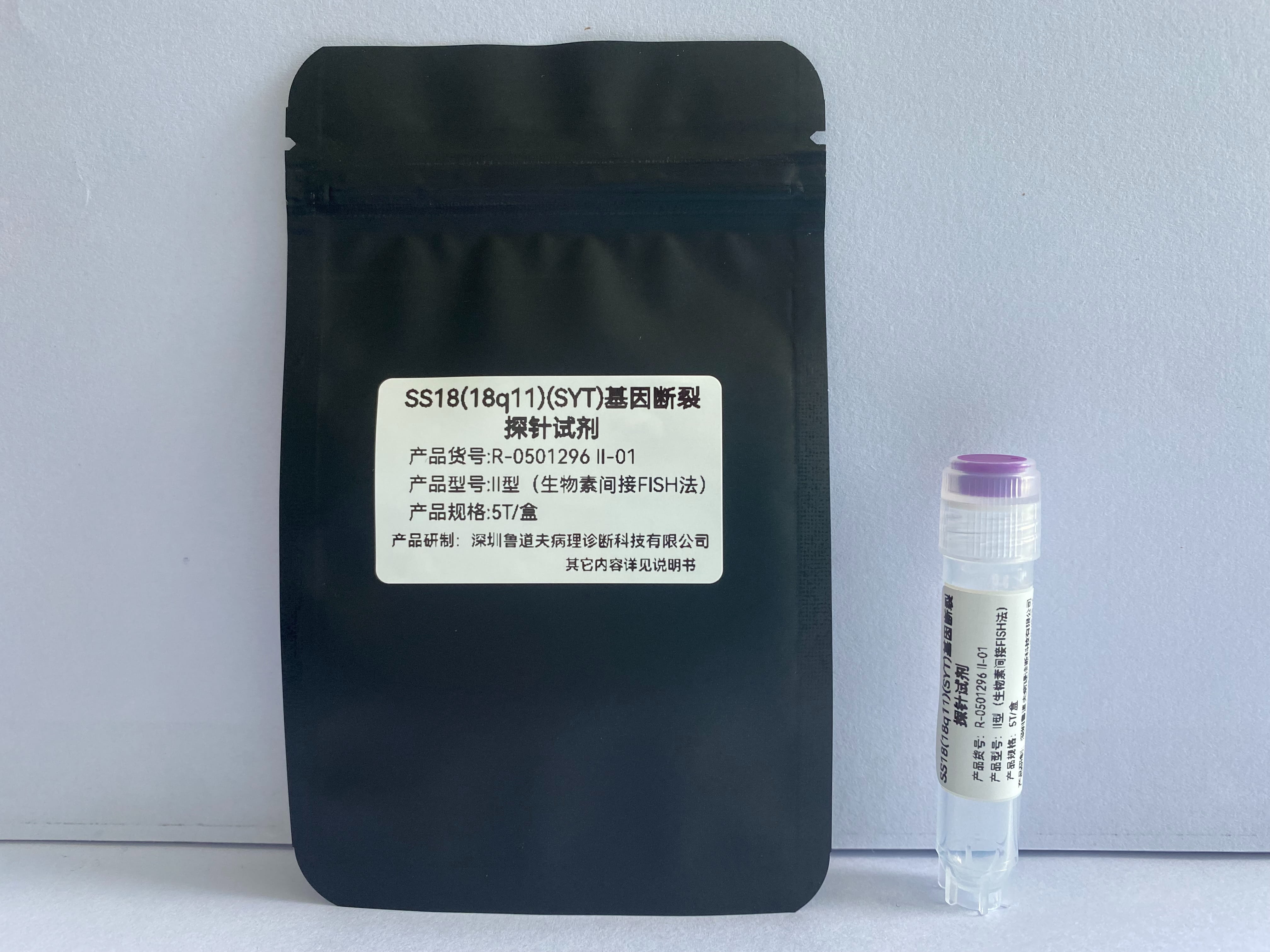
Application to synovial sarcoma (synovialsarcoma). Synovial sarcoma is most common in young adults aged 15-20 years, slightly more common in males than in females. 70% of cases occur in the deep soft tissues of the extremities, especially near the large joints; 15% occur in the trunk. The tumor tissue may have histologic features of bidirectional or monophasic differentiation;
95% of cases have a specific t(X;18)(p11;q11) chromosomal heterozygosity that produces a SYT-SSX fusion gene. 2/3 of synovial sarcomas are not SYT-SSX1 fusions, 1/3 are SYT-SSX2 fusions, and only a few are not SYT-SSX4 fusions. Because of the wide distribution of synovial sarcoma sites and variable histologic types, its diagnosis is difficult. Monophasic spindle cell synovial sarcoma needs to be differentiated primarily from MPNST, SFT, CCS, spindle cell rhabdomyosarcoma and fibrosarcoma.
Used as an adjunct to the diagnosis of synovial sarcoma, especially in poorly differentiated samples and samples occurring in uncommon tissue sites;
Note: Because the partner gene SSX is located on the X chromosome, it is susceptible to complex translocations leading to atypical positive signals when detected with the SS18 breakage probe, e.g., mono-green 1 yellow, mono-red 1 yellow, and other types.





 0752-2228195