

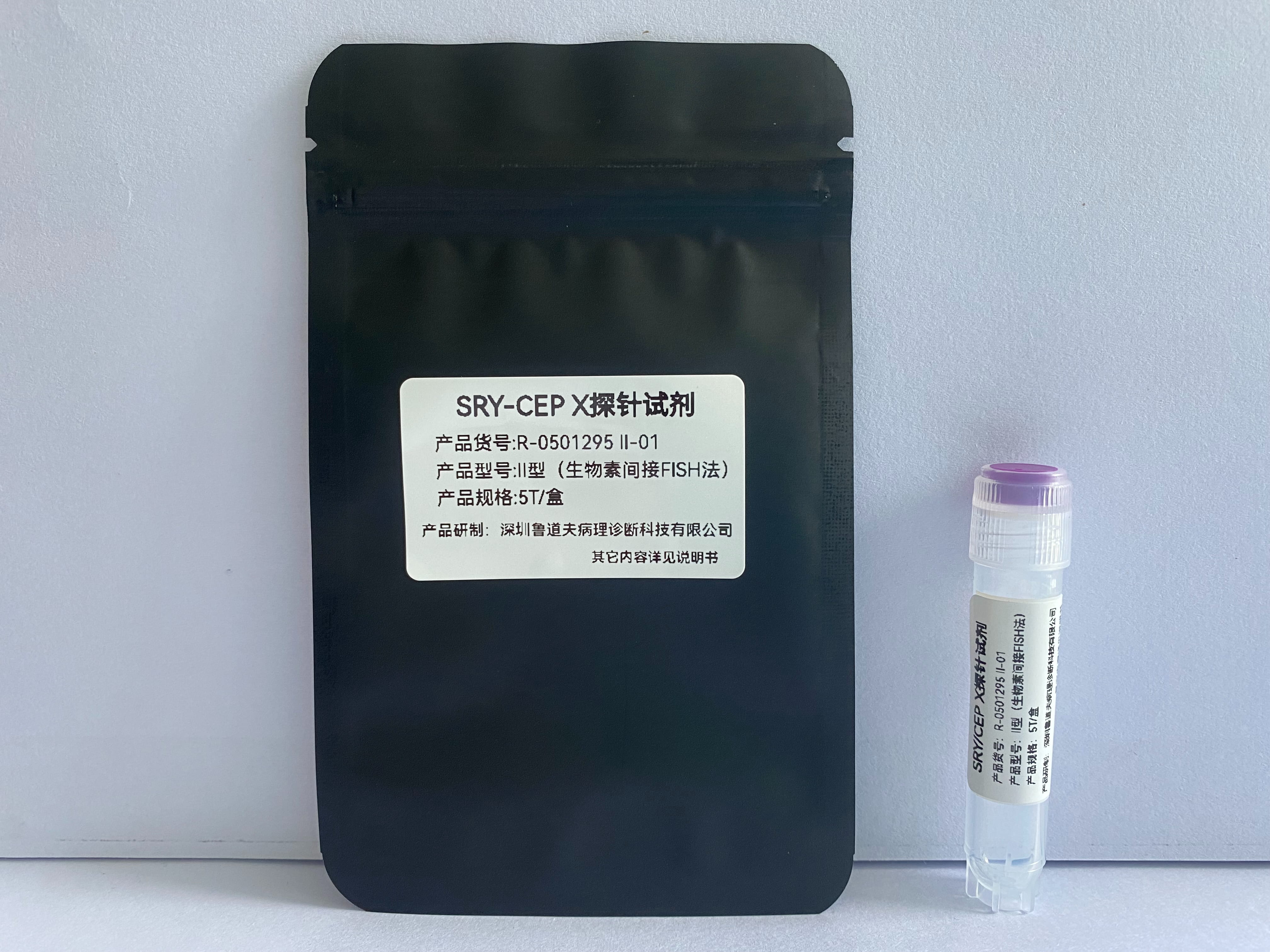
5T/box(Ⅰ-01)10T/box(Ⅰ-02)5T/box(Ⅱ-01)10T/box(Ⅱ-02)5T/box(Ⅲ-01)10T/box(Ⅲ-02)5T/box(Ⅳ-01)10T/box (IV-02)

5T/box(Ⅰ-01)10T/box(Ⅰ-02)5T/box(Ⅱ-01)10T/box(Ⅱ-02)5T/box(Ⅲ-01)10T/box(Ⅲ-02)5T/box(Ⅳ-01)10T/box (IV-02)
Previous studies have shown that deletions, mutations, translocations, and inverted repeats of the SRY gene may lead to disorder of sex development (DSD), and that the SRY gene is the best candidate for a testicular determinant, and that the presence of the SRY gene is not a determinant of testicular formation. The SRY gene is the best candidate for testicular determinant, and the presence of SRY is not a determinant of testicular formation. Patients with abnormal sex development should be routinely tested for the SRY gene, and the gonads should be explored if SRY is positive even in the absence of a Y chromosome. FISH technology uses specific probes to localize the SRY gene on chromosomes, and can be used to determine whether the SRY gene is translocated to the X chromosome or autosomes, leading to a loss of function and abnormal sex development.