

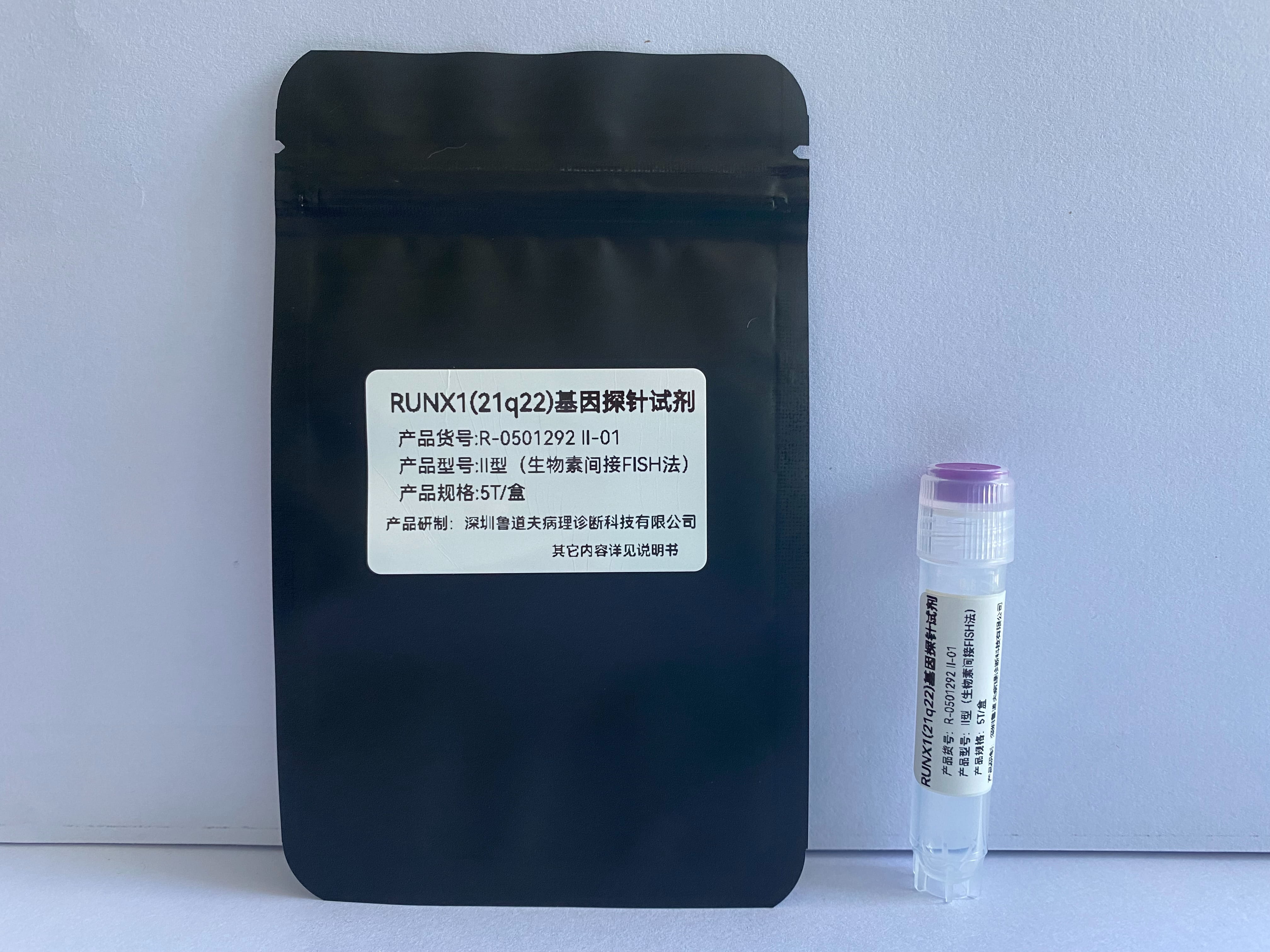
5T/box(Ⅰ-01)10T/box(Ⅰ-02)5T/box(Ⅱ-01)10T/box(Ⅱ-02)5T/box(Ⅲ-01)10T/box(Ⅲ-02)5T/box(Ⅳ-01)10T/box (IV-02)

5T/box(Ⅰ-01)10T/box(Ⅰ-02)5T/box(Ⅱ-01)10T/box(Ⅱ-02)5T/box(Ⅲ-01)10T/box(Ⅲ-02)5T/box(Ⅳ-01)10T/box (IV-02)
Acute Lymphoblastic Leukemia ALL
IAMP21 refers to a structural abnormality involving multiple gains, expansions, inversions, and deletions in chromosome 21, and was first proposed in 2003.It was found that children with IAMP21-ALL were associated with older age, lower white blood cell counts, a high risk of relapse, and a poor prognosis, and that the intensity of intensified chemotherapy significantly improved the prognosis of the patients.As a result, the 2016 World Health Organization (WHO) leukemia typing suggests concomitant IAMP21-ALL as a new subtype of B-ALL.The results of FISH and other assays show that RUNX1 is usually within the amplification region of IAMP-ALL, so FISH assay using the RUNX1 probe is a more reliable assay at present. Currently widely used diagnostic criteria: using RUNX1 probe, FISH method found 5 or more copies of the RUNX1 gene in the nucleus of interphase cells, or ≥3 copies of RUNX1 on 1 chromosome of intermediate dividing cells.